
Printing Proofs: Soft Proofing vs Hard Proofing: When To Use Each?
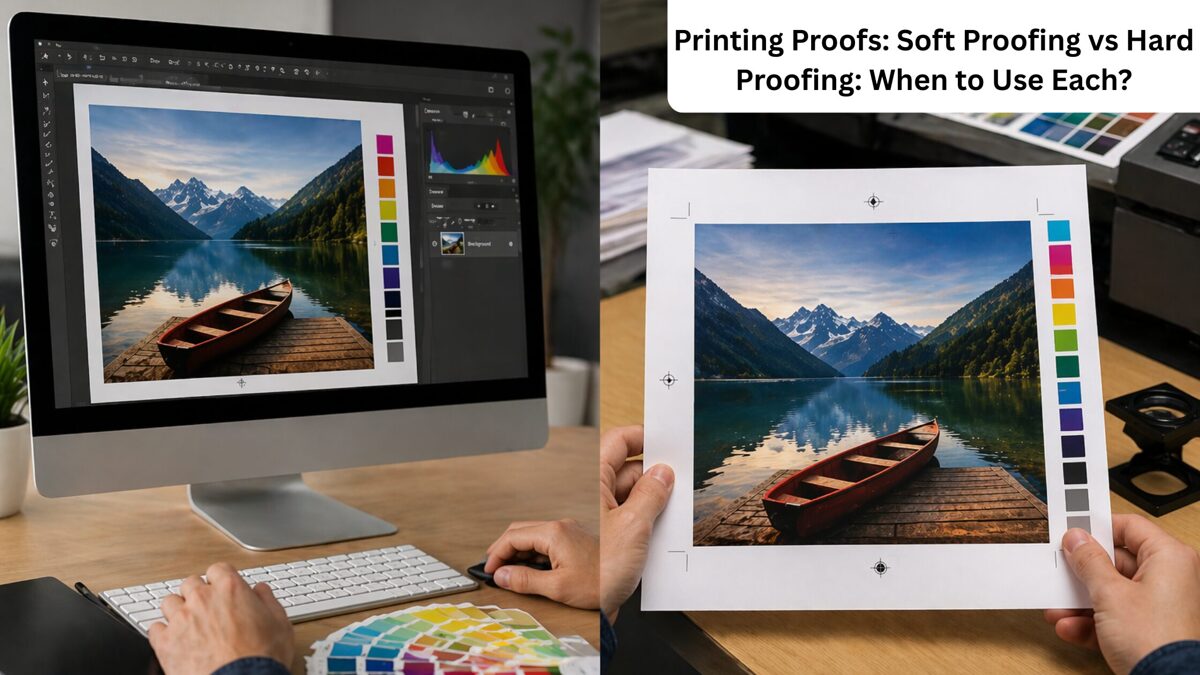
Few things are more frustrating than approving a design on screen and receiving a printed version with completely different colors. It often happens when businesses skip the proofing stage before print production.
Have you already approved the design on screen, only to receive it printed and find that the colors were completely different? Such things happen more than once when prepress printing, especially when companies skip the proofing stage.
Knowing the difference between hard proofing and soft proofing can help you save your precious time and avoid expensive mistakes, additional costs, and material loss. Printing mistakes can lead to expensive reprints, wasted materials, and project delays.
No matter what material you print, such as packages, catalogs, brochures, and more, the choice of the right proofing is important. Both hard and soft proofs can be beneficial, but choosing the wrong proofing method can lead to unnecessary costs or disappointing print results. This blog discusses the differences between hard proofing and soft proofing, and the ideal time to use each.
What Is Soft Proofing?
Soft proofing refers to viewing the electronic version of the design before its print. People who need to check the design for correctness can use it. Usually, soft proofing is used by printers, designers, and clients to assess layout, text placement, color, and other design elements.
The reasons to use soft proofing include its convenience, speed, and cost-efficiency. Being electronic, soft proofs help people save money and make design changes as needed without additional printing.
Advantages Of Soft Proofing
Speedy review process.
Ease of showing the design to clients and other persons.
Low costs because there are no material costs.
Quick editing and updating options.
A unique opportunity to check alignments, spelling, and design.
Such proofing is beneficial for projects that require editing and revisions.
What Is Hard Proofing?
Hard proofing means the printed sample of the design is reviewed before it is printed in full. That means that the future printed piece of paper is created beforehand.
Compared to soft proofing, the main advantage of the second method is that you can see the CMYK colors, the paper quality, and the finishing features of your product.
Advantages Of Hard Proofing
A realistic sample of the printed product
Ability to control paper quality and finishing
Greater color accuracy
Reduced risks of expensive errors
Possibility to approve the design before printing a large quantity of materials
Useful for high-value printed products such as catalogs, packaging, luxury brochures, and more.
Hard Proofing vs Soft Proofing: Comparison
When comparing hard vs soft proofing, the first difference is the format. Thus, soft proofs are electronic, and hard proofs are printed. Another difference concerns speed and price.
Thus, soft proofing is cheaper and faster than the second kind of proofing. Nevertheless, hard proofing is more accurate.
Here is a table outlining several differences to help you make the right decision.
Feature | Soft Proofing | Hard Proofing |
Format | Digital screen | Printed Copy |
Cost | Low | Higher |
Speed | Fast | Slower |
Colour Accuracy | Limited by screen settings | More Accurate |
Paper review | Not possible | Possible |
Best Use | Early Revisions | Final Approval |
The table above highlights key differences between hard and soft proofing to help you decide which proofing method to use.
When To Use Soft Proofing?
If you need instant feedback, you must use soft proofing. Soft proofs are useful when it comes to:
Viewing spellings and alignments.
Social media graphics.
Reviewing the early draft of the design.
Collaborating with the team.
Reviewing digital ads.
Getting feedback from the clients.
Small print projects with flexible requirements for colors.
For instance, if a company needs to design a brochure for an upcoming event, soft proofing can be helpful, as people can make several amendments before final approval.
When To Use Hard Printing?
It is wise to select hard printing when the color accuracy is crucial for the project. Hard proofs can be useful for:
Big prints.
Products that are related to brands.
Packaging design.
Product labels.
Luxury brochures.
Magazines and catalogs.
For example, if a cosmetics company plans to create luxury packaging for its products, it is vital to know the color that will be printed on it. In such a case, it is necessary to check whether the colors match before printing hundreds of units.
Soft Proofing and Hard Proofing Together
It is unnecessary to select a single proofing method. In most cases, it is beneficial to use both soft and hard proofing. For instance, you can make the early drafts with the help of soft proofing.
Once the design is ready, create a printed sample and check it carefully. In this way, a business can save time during the initial design stage while ensuring the final print is perfect.
Primary Mistakes To Avoid
When dealing with printing proofing, you should be careful not to fall into these problems:
Depending on your computer or other device, the final print will differ from what you see on your display.
Not using hard proofing for printing when it is critical.
Neglecting to calibrate displays used for soft proofing.
Make The Final Selection Of Prepress Printing Proofs Based On Your Project Needs
Knowing the difference between hard proofing and soft proofing can help you make the right decisions when printing. The first method is more convenient and faster. However, if you are interested in color accuracy, it is better to use hard proofs.
Nevertheless, depending on your primary needs and preferences, you should use both types of proofing. Thus, cooperation with prepress printing services will let you avoid problems.