
The Role Of Imposition and Nesting In Print-Ready File Preparation
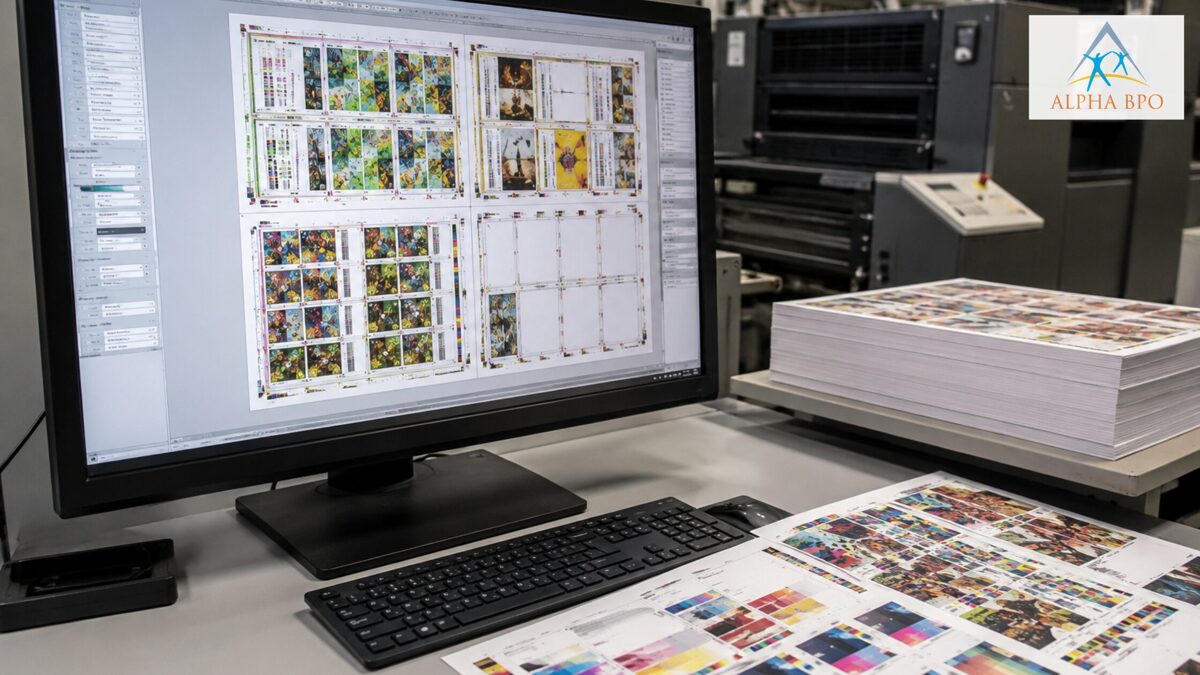
A single file preparation mistake can delay production, increase material costs, and force expensive reprints. Yet many printing issues originate long before a press starts running.
But has there ever been a situation where you sent a design file for printing and then faced misalignment, production delays, or unnecessary material waste? In many cases, such problems occur much earlier, during file preparation. While many businesses allocate remarkable funds for their marketing materials and design solutions, the importance of prepress services is often overlooked. But preparing accurate print-ready files and optimizing them are essential steps for efficient printing, and imposition and nesting processes play a key role in the prepress workflow.
File preparation benefits go far beyond making sure the printout looks great. They can improve speed, reduce material waste and cost, simplify the process, and make print project execution much easier. As shown in studies focusing on waste reduction in the printing industry, paper accounts for around 30% of production costs. This article highlights the importance of imposition and nesting in efficient printing.What Does It Mean For A File To Be Print-Ready?
Before discussing imposition and nesting processes, it is essential to understand what print-ready files are. In general, print-ready files have all the specifications necessary for efficient printing. In particular, they have accurate dimensions, color profile, bleed specifications, crop marks, resolution, and fonts. With such parameters, a printer can start working without wasting too much time on file preparation.
Perfect file preparation is only a part of the process. Before printing, the layout must be optimized. At this stage, imposition and nesting come into play.
What Is Imposition?
Imposition refers to the process of placing print pages on a single sheet so that, after folding, printing, cutting, and binding, they can be found in the right order.
For example, multiple pages of a 16-page brochure are printed on a single sheet as a block. After that, the block is cut, folded, and bound; that section will be in the correct order. Incorrect page imposition results in improper page placement, page numbering problems, or even mistakes in binding.
The Importance of the Proper Imposition ProcessImposition in prepress has several functions, including:
Efficient page sequence arrangement.
Reduction of printing errors.
Improved speed of finishing operations.
Better sheet utilization.
Lowering the printing costs.
What Is Nesting In Printing?
Whereas imposition concerns the order of pages, nesting is the practice of placing multiple items on a single sheet to maximize available space.
Nesting is like the world’s most efficient puzzle. It can be done by adhering to rules to find and fit all sections of a sheet with the least amount of space. Today, modern nesting software can calculate the best layout of items based on existing artwork.
Benefits Of Effective Nesting
By applying optimal nesting, businesses can gain the following:
Lower material consumption;
Improved use of the material;
Quick production schedule organization;
Reduced operation costs.
Higher profit margin.
Merging Imposition and Nesting Processes
While they have many distinctions, these processes often co-occur in contemporary printing.
Organizing pages for printing is done via imposition, whereas nesting relates to the efficient use and optimization of available materials.
In combination, these prepress processes can be used for:
Improving print production efficiency.
Better print layout optimization.
Reducing production waste.
Producing high-quality prints.
Increasing speed of job completion.
Media Waste Reduction Through Optimization Of File Preparation
One of the main sources of waste is improper file preparation. Due to poor file preparation, extra paper may be required, and the job may need to be repeated, resulting in additional production costs.
Imposition and nesting processes help minimize media waste by providing precise layouts and optimized sheet utilization.
Print providers can significantly enhance media waste reduction activities without lowering quality.
This process reduces operational expenses and helps companies achieve their environmental objectives.
The Importance Of Automated File Preparation
You cannot have a modern printing environment without automated file preparation systems. Manual labor is lessened with automation. The quality of the work and the consistency across projects have greatly improved. Among other things, today’s automated tools can:
Optimize production parameters.
Check print specifications.
Detect file mistakes.
Create nesting layouts.
Organize imposition layouts.
Industries That Can Take Advantage Of Imposition and Nesting
These techniques are extensively used in many industries.
Labels
An effective nesting process helps fit more labels per sheet, thereby increasing profits.
Large Format Printing
Large-format printing requires specialized nesting software because shapes are more complex.
Production of Packaging
Nesting is widely used in packaging production.
Commercial Printing Services
Printing catalogs, books, magazines, and brochures requires the proper imposition.
How To Prepare Print-Ready Files For Successful Printing Projects
To receive more value from imposition and nesting, you should consider several tips:
Apply Automation
Modern tools improve the efficiency of the print preparation process and reduce errors associated with routine labor.
Provide Precise Source Files
Make sure your artwork was created using the correct colors, dimensions, and resolution.
Specify Correct Bleeds and Margins
Correct bleed specifications minimize problems related to trimming.
Take Advantage Of Professional Prepress Services
Expert prepress operators can help optimize files for a specific printing method.
Check Proofs
Despite the automation, proofing helps detect potential problems before printing.
Achieve The Higher Precision And Design Quality With Digital Prepress Services
File preparation for printing involves more than simply creating a PDF. Behind each print job is a comprehensive prepress workflow that includes many actions aimed at improving print production efficiency, saving money, and eliminating problems. The process of imposition and nesting makes an important contribution to the above objective.
With the development of printing technologies, it is increasingly important for companies to use effective prepress workflows, file preparation practices, and tools. With their help, businesses can improve their print production operations and the quality of the final product. Working with a company that offers digital prepress services can be highly beneficial for printing packages, brochures, labels, and wide-format graphics.
Automated prepress workflows, accurate file preparation, optimized imposition and nesting processes all deliver a substantial return on investment. It is due to reducing waste, improving output quality, and increasing profitability for all print operations.